
Children begin learning about communication long before they can speak in complete sentences. A baby’s smile, a toddler pointing toward a favourite toy, or a preschooler asking endless questions are all examples of how communication develops through everyday experiences.
Parents and caregivers play an important role in creating opportunities for children to listen, interact, and express themselves. These opportunities do not necessarily require special equipment, structured lessons, or complicated activities.
Ordinary moments such as preparing meals, reading bedtime stories, singing songs, and playing together can encourage meaningful communication.
For families across Ontario, understanding how everyday interactions support speech and language development can make communication practice feel natural, enjoyable, and manageable.
Why Communication Development Begins With Everyday Interactions
Children learn about communication through interactions with the people around them.
From infancy, they begin noticing facial expressions, gestures, voices, and responses.
As children grow, they gradually develop ways to express their needs, share interests, and interact with others.
Speech and language are related but different aspects of communication.
Speech involves producing sounds and spoken words, while language involves understanding and expressing meaning through words, gestures, signs, and other communication methods.
Everyday interactions provide opportunities to develop these abilities.
For example, when a caregiver responds to a child’s gesture or attempts to communicate, the child experiences communication as a meaningful exchange.
These interactions do not need to be perfect or carefully planned.
Consistent opportunities for connection are more important than turning every activity into a lesson.
Talking With Children Throughout Daily Routines
Daily routines provide natural opportunities to introduce language.
During breakfast, parents might describe the foods being prepared, name familiar objects, or talk about what will happen during the day.
While getting dressed, caregivers can discuss colours, clothing, and simple choices.
For example, a parent might say, “Let’s put on your blue socks. Now we need your shoes.”
These conversations introduce vocabulary within familiar situations.
Children can also be encouraged to participate according to their communication abilities.
A younger child may respond with a gesture or sound, while an older child might answer a question or describe an experience.
The objective is not to demand constant verbal responses but to make communication a comfortable part of everyday life.
How Reading Together Encourages Language Development
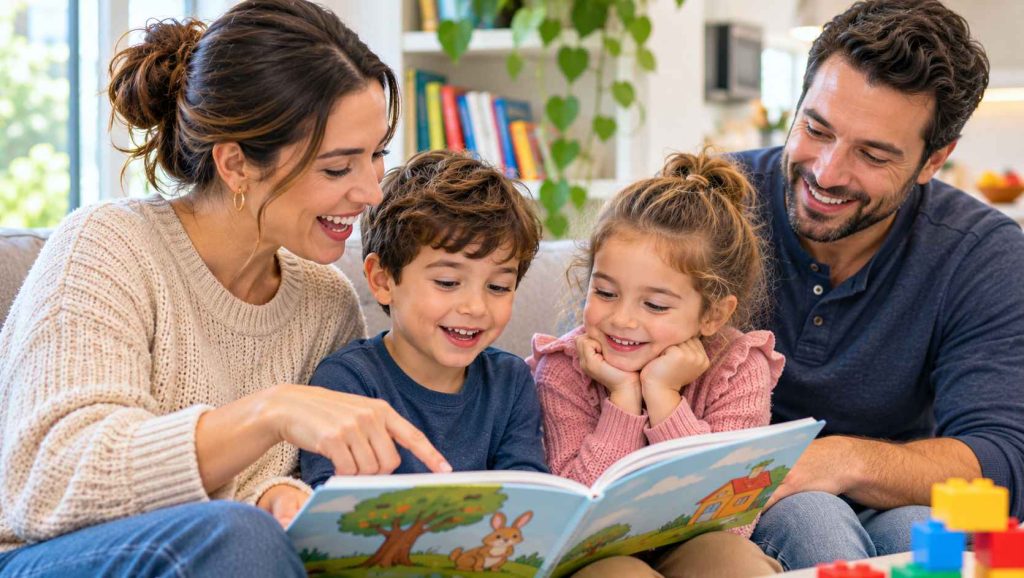
Reading provides opportunities for children to hear new words, explore stories, and participate in conversations.
Parents do not need to finish every page of a book for the experience to be meaningful.
Young children may prefer pointing at pictures, naming objects, or discussing familiar characters.
For example, while reading a picture book about animals, a caregiver might ask, “Where is the dog?” or comment, “The little dog is sleeping.”
Older children may enjoy predicting what happens next or discussing how characters feel.
Repetition can also be useful.
Children often enjoy hearing familiar stories multiple times.
Reading together should remain enjoyable rather than becoming a test of vocabulary or comprehension.
Using Songs and Rhymes to Encourage Communication
Music is another accessible way to introduce language during everyday activities.
Songs and nursery rhymes provide opportunities to hear patterns of sounds, words, and rhythm.
Parents can sing during playtime, bath time, or car journeys.
Familiar songs may encourage children to participate through movements, gestures, sounds, or words.
For example, a caregiver might pause during a favourite song and allow the child an opportunity to contribute.
Participation may look different depending on the child’s age and communication abilities.
Some children enjoy singing, while others prefer listening or following actions.
The important consideration is creating an enjoyable shared experience without pressure.
Why Responding to Communication Attempts Matters
Children communicate in many ways before developing fluent spoken language.
Pointing, reaching, making sounds, using gestures, and showing objects can all communicate meaning.
When parents notice and respond to these attempts, they help maintain a back-and-forth interaction.
For example, a toddler pointing toward a toy car may be expressing interest.
A caregiver might respond, “You found the car! It’s a red car.”
This response acknowledges the child’s communication while introducing additional language.
Parents can also allow children time to respond instead of immediately filling every pause.
A child’s contribution does not need to be a complete sentence.
Recognizing different forms of communication helps create supportive interactions.
Introducing New Vocabulary Through Familiar Activities
Children encounter opportunities to learn vocabulary throughout the day.
Cooking, shopping, gardening, and outdoor walks can introduce words connected to real objects and experiences.
For example, while preparing a snack, parents might describe a banana as yellow, soft, or sweet.
During a walk, they could talk about birds, trees, vehicles, or changing weather.
Rather than introducing many unfamiliar words at once, caregivers can build on what the child already understands.
If a child says “big truck,” an adult might respond, “Yes, that’s a big red truck.”
This approach provides a slightly expanded example without requiring the child to repeat it.
Everyday vocabulary development should reflect the child’s interests and communication level.
Encouraging Questions and Taking Turns in Conversations
Conversations involve both expressing ideas and responding to others.
Parents can encourage these exchanges through simple questions, comments, and shared activities.
However, asking too many questions can make interactions feel demanding.
Balancing questions with observations allows children to participate more naturally.
For example, while building with blocks, a parent might say, “Your tower is getting taller,” before waiting to see how the child responds.
Taking turns can also be encouraged through games.
Rolling a ball back and forth, sharing puzzle pieces, or alternating actions during pretend play introduces the idea of shared participation.
These experiences can support communication without requiring formal instruction.
How Play-Based Activities Support Communication
Play creates opportunities for children to explore interests, express ideas, and interact with others.
Pretend play, building activities, puzzles, and simple games can all encourage communication.
A child pretending to run a grocery store might name foods, request items, and describe what customers need.
Parents can participate by following the child’s interests and adding language naturally.
For example, if a child pretends to cook, a caregiver might say, “You’re making soup! What should we put in the pot?”
Activities should remain flexible and enjoyable.
Not every child prefers the same games, and communication can occur through spoken words, gestures, pictures, or other methods.
Understanding That Children Develop at Different Rates
Children do not all develop communication abilities at exactly the same pace.
Differences may appear in when children begin using words, combining sentences, or developing particular speech sounds.
Parents may find themselves comparing their child’s progress with siblings, classmates, or other children.
However, comparisons do not provide a complete understanding of an individual child’s development.
The ASHA communication milestones for children offer general information about communication skills that may emerge at different ages.
These milestones are guides rather than diagnostic tools.
A child’s developmental history, communication environment, and individual needs should also be considered.
When Parents May Want Professional Guidance
Parents sometimes notice that their child has difficulty understanding instructions, expressing needs, producing speech sounds, or participating in communication.
Other concerns may involve persistent frustration during communication or a loss of previously acquired skills.
These observations do not automatically indicate a disorder.
However, discussing concerns with a qualified speech-language pathologist can help families understand whether additional assessment is appropriate.
Parents exploring pediatric speech therapy services may find it useful to learn how professional assessment identifies communication strengths, challenges, and potential support needs.
Seeking guidance does not mean that every developmental difference requires treatment.
It provides an opportunity to ask questions and receive individualized information.
How Speech-Language Assessment Can Support Families
A speech-language pathologist considers a child’s communication abilities, developmental history, and everyday needs.
Assessment may involve observing communication, speaking with caregivers, and using appropriate activities or assessment tools.
The process helps determine whether support is recommended and what goals may be relevant.
Ontario-based TalkInc Speech, Language, & Voice Therapy provides speech-language services, including support for children’s communication development.
Professional recommendations should reflect the individual child rather than a universal approach.
Families may also receive suggestions for supporting communication within familiar routines.
Conclusion: Everyday Moments Create Meaningful Opportunities
Supporting children’s speech and language development does not require turning family life into a series of structured lessons.
Talking during meals, reading together, singing familiar songs, and enjoying playtime can provide opportunities for communication.
Responding to children’s interests, allowing time for interaction, and introducing language naturally can make these experiences more meaningful.
Every child develops differently, and professional guidance may be appropriate when parents have concerns.
Ultimately, communication development is supported through connection, patience, and opportunities to share experiences. Everyday family moments can provide a comfortable foundation for children to explore and develop their communication abilities.


